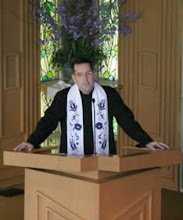
All the best,
Roger Butts
Rev. Roger Butts
A Theology of Friendship
July 31, 2011
High Plains Church, Colorado Springs
hpcuu.org
READING NUMBER 1
From the gospel of John. John 15: 12-17
READING NUMBER 2
In April of 1996 the international press carried the news of the death, at age seventy-five, of Christopher Robin Milne, immortalized in a book by his father, A. A. Milne, Winnie-the-Pooh, as Christopher Robin.
I share it with you. Below that I share some of my own thoughts.
*****
Christopher Robin
by Czeslaw Milosz
I must think suddenly of matters too difficult for a bear of little brain. I have never asked myself what lies beyond the place where we live, I and Rabbit, Piglet and Eeyore, with our friend Christopher Robin. That is, we continued to live here, and nothing changed, and I just ate my little something. Only Christopher Robin left for a moment.
Owl says that immediately beyond our garden Time begins, and that it is an awfully deep well. If you fall in it, you go down and down, very quickly, and no one knows what happens to you next. I was a bit worried about Christopher Robin falling in, but he came back and then I asked him about the well. “Old bear,” he answered. “I was in it and I was falling and I wore trousers down to the ground, I had a grey beard, and then I died. It was probably just a dream, it was quite unreal. The only real thing was you, old bear, and our shared fun. Now I won’t go anywhere, even if I’m called in for an afternoon snack.”
SERMON
So today’s sermon
is inspired by Amanda Udis Kessler’s reflection
a few weeks ago for pride sunday
in which she asserted that the
kingdom of god is queer.
A wonderful image.
Her sermon brought to mind
the great queer theologian Mary Hunt
and her insistence that friendship
is the model of what the
life of the spirit is all about.
Hunt says that "friendship is available to everyone."
And that friendship "by its nature,
assumes that persons live in relationships
and that relationships are good." (7)
Friendship has the potential to alleviate social ills,
because it can link persons who are "structural enemies,"
people in different racial and ethnic groups.
And it then motivates friends to work
"to change the social structures
because of their commitments to one another." (92)
When a friendship works, she says,
people know.
"It generates something new for both the persons
and for the larger community of which they are a part.
Generativity is the hallmark of friendship."
True friendship is creative.
So that is where we start off today. That is our launching pad.
And I want to add to this idea
by reflecting on
three qualities of friendship
that I believe mirror the life of the spirit.
If the question is: How is friendship like the life of the spirit?
I want to answer that it involves abandonment, pure, joyful abandonment.
I want to answer that it involves accompaniment.
And that it involves awakening.
ABANDONMENT
I want you to remember a time,
just for a moment,
when you
were in the presence
of a dear friend and you
laughed,
giddily, like a school girl,
with abandonment and pure joy
Abandonment--not friends are leaving me,
but abandonment as in I am just laughing my head off
and abandoning any sense of control, any sense of decorum.
Pure ecstasy. Wild abandon.
I want you to remember what that felt like,
deep down in your bones.
Because this morning I am going to say that the feeling you just recalled--
that abandonment, that pure joy,
that feeling of being completely and utterly your self,
in other words that feeling of being free--
captures the essence of my topic this morning.
How is friendship like the life of the spirit?
It involves abandonment.
How is the kingdom of God like deep friendship?
It is full of people who are able to engage in abandonment.
---
Abandonment:
Consider these words
from an eastern tradition...
without profound
commitment, discipline, intelligence, courage,
and a sense of wild,
foolhardy, fearless abandon.
Why is that? And why foolhardy abandon?
Foolhardy because the path is for gamblers.
There is a beautiful
Rumi poem which speaks to this
from the Sufi tradition.
"Love is reckless; not reason.
Reason seeks a profit. Love comes on
strong, consuming herself unabashed.
Yet in the midst of suffering
love proceeds like a millstone, hard
surfaced and straight forward.
Having died to self interest,
she risks everything and asks for
nothing.
Love gambles away every gift God bestows.
Without cause God gave us Being;
without cause give it back again.
Gambling yourself away is beyond any religion.
Religion seeks grace and favor,
but those who gamble these away are
Gods favorites,
for they neither put God to the test
nor knock at the
door of gain and loss"
The life of the spirit takes the jump
into crazy wisdom
by eliminating even God
from the equation,
leaving only the mystery
with no ultimate attempt
to define it.
This is a path for those whose hearts
are so wild that they are ready
to throw it all away on a hunch,
for an intuition.
ACCOMPANIMENT
I want you to remember now
a moment
when you were comforted by a friend.
When you were able to cry in the presence of a friend.
I want you to remember now
a time
when you were able to say
I am not in control right now.
I am vulnerable.
I am lost.
I am confused.
And the friend
rather than judging you
rather than fixing you
rather than correcting you
simply sat there and
let you be.
Let you be just who you are.
Can you remember such a moment?
I want you to remember that moment
because that feeling
of being held
embraced
in the midst of your sadness
and brokenness
and still accepted
that is what we’re
talking about when
we talk about the theology
of friendship.
So this accompaniment is at the heart
of the story we heard
this morning from the gospel of john
--------
I want to turn
for a moment to that reading
we enjoyed a bit earlier
from the gospel of John.
In this part of the story,
Jesus is preparing
his disciples for his death.
Jesus knows he is not long for this world.
And what does he tell
his beloved disciples?
He says: you were once students,
you were once disciples,
now you are friends.
---
I worked for a professor
for a time
whose whole work
was to take this passage
and to show how Jesus in this passage
embodies the feminine image of the divine,
Wisdom,
and to show how jesus as this feminine wisdom
was asking the disciples
to consider themselves appointed
to a life of spreading the kindness,
the friendship,
the compassion
that Jesus introduced
and lived out
as part of this community.
That their whole work
was to befriend others
as Jesus had befriended them
in love and kindness.
For my professor, Sharon Ringe,
who wrote this book Wisdom’s Friends,
she sees in Jesus the embodiment
the enfleshment
of holy wisdom
about whom it is said:
while remaining in herself,
she renews all things,
in every generation
she passes into holy souls
and makes them friends
of God and of prophets.
Jesus embodies holy wisdom
not by any kind of supernatural feats
but by accompaniment
by literally encamping
among the disciples,
by befriending them
without regard to status
or standing,
eating with them,
praying with them,
laughing and talking with them,
being present with the sick
and the marginalized,
standing up to the ridiculous
moral guardians of the status quo.
But mostly by eating together,
walking together,
talking together,
abiding with one another.
And when the time comes
for Jesus to say his goodbyes
he says to them
I have taught you everything I know,
it is up to you now.
They must have been close to demoralized.
They must have been terribly distraught.
And in that moment, Jesus turns his talk
not to triumph
but rather the simple
and enduring symbol
of friendship.
Friendship...
I want you to remember that moment
because that feeling
of being held
embraced
in the midst of your sadness
and brokenness
and still accepted
that is what we’re
talking about when
we talk about the theology
of friendship.
----
So we’ve thought about friends
with whom we’ve laughed,
with whom we can be
so authentically ourselves,
that we truly know
what abandonment is
A theology of friendship
involves that kind of abandonment.
is like that kind of wild abandonment.
Jesus was asked often
what is the kingdom of god like?
And there are all kinds of answers.
But for me when I see Jesus
talking about friendship at the moment
of his imminent departure,
I see him talking about
the kingdom of god being as with friends
the abandonment of the self,
the authentic laughter
and joy and silliness
that looks like a giving up
of control, of rationality
and being so free that
we can laugh with one another
in total abandonment.
This is how I understand
that passage.
pause pause pause
And we’ve thought about our friends
who sat with us in our tears,
just letting us cry.
And they didn’t go anywhere,
they just sat with us.
A theology of friendship
involves that kind of accompaniment.
Jesus taught his disciples
about friendship
in their moment of despair
and sadness
as the reality of their situation
hit home.
“Farewell, I’m bound to leave you,”
Jesus says.
But in my departing,
friendship endures.
The kingdom of God
is like that accompaniment,
it is friends making dinner for each other
and walking down the path together.
Now let us turn our attention to the last piece AWAKENING
AWAKENING
And so now i want you
to remember a time
when a good friend,
a true friend,
called you out,
challenged you to be
better than you could imagine.
Maybe you were being stubborn,
or blinded by bias,
or foolishness,
or maybe you just had a blindside.
And a friend,
said, Look I just want to sit down and talk about this.
You can do better than this.
A good friend, sometimes,
one writer says,
is a good harasser.
Someone who birddogs you
until you see the truth of the matter,
on your own, and in your own way and on your own schedule.
But someone who accepts you
and loves you
just as you are
AND at the same time
loves you enough to say
have you considered this other alternative,
this other way of looking at this situation?
Who is courageous enough to hold up a mirror to you
and say look, this is what i’m seeing.
---
I am thinking of my friend Tricia now.
I don’t know who you are thinking of
but I’ve known my friend Tric
for 30 years
and her husband Jon
even longer.
I was there when she got married
she was there when I got married
we’ve done that thing
that you do in your early-20s
when you get a beach house
and the whole weekend
you can’t touch the lineoleum flooring
in the kitchen
so all weekend if you want to get a beer
you have to crawl on the counters.
We’ve laughed and walked and been stupid together.
Abandonment.
When she got cancer I accompanied her.
Thick and thin. Ups and downs.
If I get off course,
she’s not going to just let it go.
She has permission to call me out.
To remind me of my best self
and to challenge me to return,
return, return, return.
And if I try to shortcut it,
if i try to justify
or explain it away,
she can look at me
and say:
I knew you
when you were a smelly
adolescent
don’t try that with me.
I’ve known you
at your best
and at your worst.
I know you.
You are better than this.
Awakening in me the slumbering
part that is my best self.
President Kennedy
used to tell this story.
It involved a group of kids
in Ireland, best friends,
and they’d run around
all day and set out on a course
for the day
and if they’d come across
a wall in the Irish countryside
that seemed too tall
too daunting
they’d all throw their hats over the wall
and that way they’d have to get over the wall
and they’d have to do it together.
Awakening in each other the possibilities.
A theology of friendship is about calling
each other to our best selves.
It is about being known and knowing
another in such a way that we call
forth the best in one another,
climbing over walls that we might
never try otherwise.
Awakening.
Implications for the church.
1. Let us provide multiple opportunities for spiritual practices which allow all of us to experience the transcendent reality in ways that encourages us to pursue wild abandonment.
2. Let us never forget the obligation to become better and better care-givers and care-receivers.
3. Let us always be aware of the crucial power of the church to call out each one of us to our deepest calling, our deepest aspirations.
Posted by Guest
Citizens Project is a proud member of the Pikes Peak Equality Coalition. The following is a letter in response to the bias-motivated crimes on July 3, written by Rosemary Harris Lytle and Shawna Kemppainen on behalf of PPEC:
The alleged bias-motivated crime that sent two soldiers to the hospital, ironically on Independence Day weekend, has resulted in outrage from the LGBTQ community and their allies in the wider civil-rights community.
Many details of the crime are still unclear and not even a real description of the suspects is yet available. But what happened has resulted in cries for more dialogue, more understanding and more education about diversity, inclusion and public safety.
As representatives of the Pikes Peak Equality Coalition (PPEC), we join our voices with those who recognize that racial and ethnic tension, heterosexism, gender bias, able-ism, and other forms of discrimination still run high in Colorado Springs. Our broad coalition is committed to a strong, vibrant community where the most vulnerable are cared for and responsive leadership values diversity and equality.
Unfortunately, reports of another alleged hate crime mean that our coalition has plenty of work to do — and so does our city has a whole. Marginalized groups, in this instance the LBGTQ community, often wonder whether they stand alone in combating the discrimination.
With our city’s troubled history, it will take a comprehensive strategy, wide community dialogue and support from the highest echelons of leadership, to get to the root causes of our troubles.
If we continue to ignore the obvious need to, as icon Fannie Mae Duncan said, make everybody feel welcome, it will affect everything – from which employers choose to bring jobs here to whether tourists will come to witness our region’s beauty and bounty.
But Colorado Springs can’t continue to be beautiful on the outside and ugly on the inside. The literal bottom line is that the lack of acceptance of those perceived as “different” is a villagewide issue. And it will take our whole village to change it.
— Shawna Rae Kemppainen, Executive Director - Inside Out Youth Services
— Rosemary Harris Lytle, President – Colorado Springs Branch NAACP
Easter 2011, High Plains Church, Colorado Springs
Rev. Roger Butts
So on Tuesday High Plains had a passover seder--led by the Solters and Alan Gershanov and Nathan Mesnikoff. During that time, we said aloud names of freedom-lovers, lovers of justice and peace. On Friday, we had a Good Friday service and we sang and we told the story of Jesus and we left it at the moment of his crucifixion. So today, let's read how it all plays out.
The passage
When the Sabbath was over, Mary Magdalene, Mary the mother of James, and Salome bought spices so that they might go to anoint Jesus' body. Very early on the first day of the week, just after sunrise, they were on their way to the tomb and they asked each other, "Who will roll the stone away from the entrance of the tomb?" But when they looked up, they saw that the stone, which was very large, had been rolled away. As they entered the tomb, they saw a young man dressed in a white robe sitting on the right side, and they were alarmed. "Don't be alarmed," he said. "You are looking for Jesus the Nazarene, who was crucified. He has risen! He is not here. See the place where they laid him. But go, tell his disciples and Peter, 'He is going ahead of you into Galilee. There you will see him, just as he told you.' "
Trembling and bewildered, the women went out and fled from the tomb. They said nothing to anyone, because they were afraid.
---
That is the story.
And so much time and so much effort has been placed on whether it is a historical narrative or not,
whether it is a culmination of the God of Israel’s desire and understanding even before the world began. That Jesus’s death was preordained and predetermined and crucial to the salvation of humanity.
And for those on the left,
the "factuality" of it all have led certain christian scholars to say of the burial of Jesus things like this:
the burial of jesus by his friends is of course a falsehood.
He would have been buried by his enemies in the roman bureaucracy
and the grave would have been shallow enough
to have wolves and dogs get to Jesus body without any trouble.
This morning I don’t want to focus on either of those approaches.
Rather, I want to invite you to take a look at this story as a parable.
Is this a story we normally think of as a parable?
No, we normally think of something like the good samaritan.
A parable is something in which one thing is laid out alongside another thing
and both are understood in new ways.
You think the kingdom of god (the beloved community)
is full of people who are pure and perfect and insiders,
but Jesus comes along and tells a story,
a parable about the kingdom of god in which a king is having a dinner party
and all the beautiful people have other things to do, other obligations,
and the king says, just go and pick some people off the streets and we’ll have a feast to end all feasts.
The kingdom of god is like this jesus says and suddenly everything looks different.
This morning I want you to think of your own stories of ‘resurrection’
and lay them down beside the story of jesus’ resurrection
and see if you have a parable on your hand.
Let me try to ‘explain’ a parable like this.
Have you ever known someone,
say at work or someone you met at a dog park
and you think you know this person pretty well, what they like, what they dislike, what their habits are.
And you go along like that for a long time,
and then one day you meet their spouse.
And you’re like Whoa,
I’ve got a new perspective on old Henry, on good old Henrietta.
Now, That’s a parable!
Or consider this story.
In Davenport, where I served seven years,
there was a woman who had been in the church since the mid-1970s.
She was a teacher, a retired teacher.
She was an associate at one of the catholic monasteries in town and a committed UU.
Every Sunday she was at church.
Every Wednesday night, she was at the dinner and worship and adult education offerings we offered.
She inspired a whole generation of newcomers in that congregation by her simple presence,
her sharing of poetry and wisdom,
her compassion and concern for others.
Let’s call her Anna.
And one day, she fell in love,
after being single for many many years.
And everyone of course was thrilled for her.
Her happiness belonged to the whole church.
It turns out, however, that her beloved was a traveller,
a man who spent nearly all of his time in places like Australia
and New Zealand and Prague and Paris and Costa Rica.
He was born a rambling man.
And she, in all of her gentleness and bravery and goodness,
had a profound fear of traveling.
She was a home body and a life in planes and trains and automobiles
was not her idea of security or wholeness.
And one day she said, toward the end of the year,
I’m traveling to Australia for a month.
And as the time came closer,
her agitation increased and increased. She fell into a deep funk.
The Anna we knew seemed distant and a bit lost to us.
One day a group of women were to go out to a retreat center for a weekend women’s retreat.
It was around early November.
I received a call early in the morning,
around 9 a.m.
Anna is not here, one of the women said to me.
And she never misses something like this.
We are worried.
I agreed to go and meet the two women at Anna’s house.
Anna’s car was in her garage.
Her house was dark. We were sorely afraid because none of this added up.
Was Anna ok?
We did some checking with some of her friends to no avail.
We decided, just to be super safe, to call the police.
We got in to her house and she had swallowed a great number of pills.
She survived this attempt to end her life,
but she was assigned to a mental unit at the local hospital.
She was seriously lost to us.
After some weeks, I called together some of the leaders of the church,
some of her catholic friends and some of her community friends
and we talked about the best way to support Anna.
In my heart of hearts I started to sense that Anna would not come out of this funk,
would not survive the next attempt, would not come out of her mental illness.
I shared with a few people that they might think about life without Anna,
that she might be lost forever to us.
Joe sings: Love Will Show the Way by David Wilcox
http://www.youtube.com/watch?v=cy0LBGTYyfg
Well, since this is an Easter parable and since the young man is sitting there at the edge of the tomb saying: Why are you looking for the living among the dead?,
you probably will realize that Anna recovered
and found her way back to life and wholeness
and her continued ministry of compassion and connection.
Even now, Anna sends Norah cards and pictures of red birds
based on a sermon I gave nearly ten years ago
and the kids say: Anna sent it, right?
Even now, as Davenport has called a new minister
and newcomers come into that place long after I have gone,
Anna greets a newcomer and says:
I’m glad you are here--oh, you’re a such and such,
I think you might enjoy meeting so and so.
In my mind’s eye I saw Anna in her casket.
I saw her as having given up on life.
I prepared myself for the despair and confusion and sadness of imaginging life without Anna
and the congregation without Anna--not out of malice just out of a sense of “realism.”
I was the guy with the white robe on
but I was doing the exact opposite,
lovingly trying to make it better by preparing for the worst.
Not so fast, she said.
Why are you looking for the dead among the living?
The living spark inside my soul, inside my spirit LIVES still.
the poet Antonio Machado says it well:
I love Jesus, who said to us:
heaven and earth will pass away.
When heaven and earth have passed away,
my word will still remain.
What was your word, Jesus?
Love? Forgiveness? Affection?
All your words were
one word: Wakeup.
You heard the song that Joe sang this morning:
it is love that mix the mortar
and love that stacks these stones
and its love that made the stage her,
though it looks like we’re alone.
in this scene full of shadows,
like the night is here to stay, there is evil cast around us
(there is despair, there is confusion, there are missed chances, missed opportunities, regrets, sadness)
but it is love that wrote the play
and in the darkness love will show the way.
Towards the end of my time in Davenport, I used to say at Easter:
so many of you are my Easter stories--
I was especially thinking of Anna.
And today, here in colorado springs,
we know that each of our lives is a kind of gospel story.
Some of us may believe that it is not possible for us to get out of that tomb that we’re trapped in.
Some of us may believe that there are just no more words of hope, no more chance of waking up.
But the gospel of your story in every moment has a chance to walk towards the peace of life,
the transforming power of love.
It is not too late, as it was not too late for Anna.
As it was not too late for Jesus, at least in the actions and commitment
of those who found in him a word of eternal life and hope.
They said to themselves: we will keep this man alive
by embodying what is most precious and life-saving about his life and teachings.
Anna said: I will keep going even though my despair was huge
because I have seen the power of my faith
the power of my connectedness with my deepest values and aspirations
and the power of the connectedness of my communities in which I find meaning and purpose,
including at the Unitarian Church.
I saw the new life that came to the congregation,
the new energy, the relief and the faith
as a result of Anna’s grace and power and commitment--
to life, to waking up.
I was a witness to resurrection.
And I imagine that it is the same grace and power that came to the disciples who said:
we will keep this thing going.
They too were witness to resurrection!
Alongside the story of Jesus,
I lay aside a story that for me is more immediate and real,
the story of Anna and her commitment to wake up and to life
and I understand both stories better.
Your life, too, is full of such gospel messages.
What stories can you lay alongside this story
and gain deeper appreciation and understanding
for your story and the Jesus story, the Anna story?
What saving message is waiting to be birthed,
is waiting to emerge, in the gospel of your life?
Happy Easter and God Bless the Whole World.
From a recent Meet the Press involving an interview with David Gregory and Ken Buck (R-CO) candidate for United States Senate.
GREGORY: Do you believe that being gay is a choice?
BUCK: I do.
GREGORY: Based on what?
BUCK: Based on what? I guess you can choose who your partner is.
GREGORY: You don’t think it’s something that’s determined at birth?
BUCK: I think that birth has an influence over it, like alcoholism and some other things, but I think that basically, you have a choice.
Recently, Ken Buck compared homosexuality to alcoholism, as if both things are diseases. I oppose his reasoning. And today I write as a minister. I write as a citizen. I write as a straight middle aged white man.
As a minister I affirm a few things. I affirm the inherent worth and dignity of every person. I believe that everyone walks around with a spark of the divine within them. I believe that all are created in the image of God. I believe that there are some who are born gay, and some who are born straight, and some who are born lesbian and some who are born transgendered. All are equal in God’s sight. Second, I affirm that science leads us to new understandings and new discoveries about the human person. Recognizing that science has a word to say about human sexuality, Presbyterians, Episopalians, the Evangelical Lutheran Church of America, the United Church of Christ, Reform and Conservative Jews, Quakers, Unitarian Universalists have all blessed same sex marriage. To one degree or another, these denominations recognize gays and lesbians in the clergy. Science and religion need not compete in these matters. They can instead complement one another. I go to National Geographic and the National Academy of Sciences and other places to learn about the origins of the universe; I do not go to Genesis. I go to the sciences to learn about new discoveries in human sexuality, not the four or five verses (always taken out of context) from the Hebrew/Christian scriptures. The Bible is of many minds on sexuality, on the nature of family, on the nature of money and so on. I do not rely solely on scripture to build my understanding of the world. I go to science, reason, scripture, and my conscience. The test for any idea, religious or otherwise, is this: does it increase my compassion and love? Does it serve to increase my sense of the brotherhood and sisterhood of all creation? Does it increase justice and equality and fairness for every person?
As far as I can tell, the only people who liken homosexuality to alcoholism are religious conservatives. I am saddened by Ken Buck’s statement, especially in light of the recent spate of suicides by young, bullied gay teens in this country. All over, certain politicians, clergy, musicians, and celebrities are appealing to the very best in humanity by sharing “It Gets Better” messages to bullied gay teens. But here in Colorado, Ken Buck and the moral guardians of the law at Focus on the Family add fuel to the fire by likening homosexuality to a terribly debilitating addictive disease.
Look, I have some gay and lesbian and transgendered clergy colleagues who are emotionally mature and spiritually deep. I have a few heterosexual clergy colleagues who are absolute messes when it comes to sexuality, attempting to fill emotional holes in their own spirit with sexual exploits involving members of the opposite sex. I have had addicted congregants, who struggle with their addictions. Sometimes those individuals overcome their struggles with the help of medications and therapy and small groups. Sometimes those individuals get trapped in the abyss. I am proud to say that I have had gay, lesbians, bisexual, and transgendered members of churches I’ve served. The two--addicts and gay/lesbian/bisexual and transgendered individuals are NOTHING alike. Gay people are not like alcoholics. Gay people are a diverse lot. Some are nice. Some are shy. Some are happy. Some are angry. They are just like everyone else. And being gay is more than just how they have sex! As a person of faith, I affirm and promote healthy relationships for all--straight, asexual, bisexual, gay, lesbian, transgendered, queer, male and female. All are equal in God’s sight. All are deserving of respect.
I write as a citizen. The inherent worth and dignity of each person--the respect that each deserves--is not just for me a faith claim. Although I do count that idea as an important part of my faith. It is more than that. It is also a fundamental right of every person in a pluralistic society. I want my US Senator to uphold the universal declaration of human rights, given to each and every person, based on their personhood--not any condition that might be a part of their birth--sexual orientation, skin color, nationality, religion, gender, etc. As a citizen of a pluralistic society, I want my gay brothers and my lesbian sisters to be afforded the same right as I want my straight mother and my elderly grandmother and the celibate monk to enjoy. These rights are given unconditionally and without reservation. In my neighborhood in Colorado Springs, there is a Muslim, a Sikh, straight couples, divorced women, gay men, churched people, unchurched people, folks who are struggling economically, folks who are comfortable. All of these need to be represented by the next U. S. Senator. We are in a time of deep, paralyzing polarities. We are in desperate need of someone to unify us, give us a common vision, give us a sense of what America can be. That person, it is clear, is not Ken Buck, and those who use wedge issues to divide us, one against another. That person is not Ken Buck, who would create a society of us (the normal ones) versus them (the abnormal ones, the sick ones, the ones outside what is acceptable). As a citizen, I want my U. S. Senator to appeal to that which is best in me. I do not want one of my leaders to appeal to my base instincts, my worst fears. (I can do that plenty well on my own!).
I write as a middle aged, straight white male. I try to think about the relatively privileged place that gives me in this society. I also reflect on the changing nature of American society--the religious pluralism, the ethnic diversity, the greater acceptance for gays and lesbians to come out and be who they are and love what they love--and I think of all of that as a gift. I think of that as an opportunity to strengthen the great American project.
Ken Buck says in response to Mr. Gregory’s question: Do you think homosexuality is a choice? Buck: Yes. Gregory: What do you mean by that? Buck: Well, I guess you are free to pick your partner. What? Does he really think single people go around saying: Today I think I will choose a partner who is male. Tomorrow female. I didn’t make a choice to be straight, anymore than a made a choice to be male. And if Ken Buck were honest with himself, he’d say the same. I am not just a middle-aged, straight white male. I am the father of 2 girls (8 and 3) and a boy (6). I do not want them to grow up in a society where political and religious leaders intimate that it is ok to bully a gay teen or a lesbian girl. If they turn out to be lesbian or gay, I do not want them bullied. I want them to grow up in a society that says everyone--regardless--is worthy of respect. That everyone should be treated as an equal. This idea that some are acceptable and some are diseased, it just doesn’t seem right to me. We can do better. I will not support Ken Buck or others who think like him. I wish more for America and its great experiment.