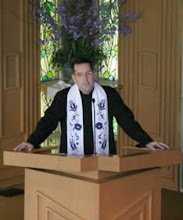
Rev. Roger Butts
A Theology of Friendship
July 31, 2011
High Plains Church, Colorado Springs
hpcuu.org
READING NUMBER 1
From the gospel of John. John 15: 12-17
READING NUMBER 2
In April of 1996 the international press carried the news of the death, at age seventy-five, of Christopher Robin Milne, immortalized in a book by his father, A. A. Milne, Winnie-the-Pooh, as Christopher Robin.
I share it with you. Below that I share some of my own thoughts.
*****
Christopher Robin
by Czeslaw Milosz
I must think suddenly of matters too difficult for a bear of little brain. I have never asked myself what lies beyond the place where we live, I and Rabbit, Piglet and Eeyore, with our friend Christopher Robin. That is, we continued to live here, and nothing changed, and I just ate my little something. Only Christopher Robin left for a moment.
Owl says that immediately beyond our garden Time begins, and that it is an awfully deep well. If you fall in it, you go down and down, very quickly, and no one knows what happens to you next. I was a bit worried about Christopher Robin falling in, but he came back and then I asked him about the well. “Old bear,” he answered. “I was in it and I was falling and I wore trousers down to the ground, I had a grey beard, and then I died. It was probably just a dream, it was quite unreal. The only real thing was you, old bear, and our shared fun. Now I won’t go anywhere, even if I’m called in for an afternoon snack.”
SERMON
So today’s sermon
is inspired by Amanda Udis Kessler’s reflection
a few weeks ago for pride sunday
in which she asserted that the
kingdom of god is queer.
A wonderful image.
Her sermon brought to mind
the great queer theologian Mary Hunt
and her insistence that friendship
is the model of what the
life of the spirit is all about.
Hunt says that "friendship is available to everyone."
And that friendship "by its nature,
assumes that persons live in relationships
and that relationships are good." (7)
Friendship has the potential to alleviate social ills,
because it can link persons who are "structural enemies,"
people in different racial and ethnic groups.
And it then motivates friends to work
"to change the social structures
because of their commitments to one another." (92)
When a friendship works, she says,
people know.
"It generates something new for both the persons
and for the larger community of which they are a part.
Generativity is the hallmark of friendship."
True friendship is creative.
So that is where we start off today. That is our launching pad.
And I want to add to this idea
by reflecting on
three qualities of friendship
that I believe mirror the life of the spirit.
If the question is: How is friendship like the life of the spirit?
I want to answer that it involves abandonment, pure, joyful abandonment.
I want to answer that it involves accompaniment.
And that it involves awakening.
ABANDONMENT
I want you to remember a time,
just for a moment,
when you
were in the presence
of a dear friend and you
laughed,
giddily, like a school girl,
with abandonment and pure joy
Abandonment--not friends are leaving me,
but abandonment as in I am just laughing my head off
and abandoning any sense of control, any sense of decorum.
Pure ecstasy. Wild abandon.
I want you to remember what that felt like,
deep down in your bones.
Because this morning I am going to say that the feeling you just recalled--
that abandonment, that pure joy,
that feeling of being completely and utterly your self,
in other words that feeling of being free--
captures the essence of my topic this morning.
How is friendship like the life of the spirit?
It involves abandonment.
How is the kingdom of God like deep friendship?
It is full of people who are able to engage in abandonment.
---
Abandonment:
Consider these words
from an eastern tradition...
without profound
commitment, discipline, intelligence, courage,
and a sense of wild,
foolhardy, fearless abandon.
Why is that? And why foolhardy abandon?
Foolhardy because the path is for gamblers.
There is a beautiful
Rumi poem which speaks to this
from the Sufi tradition.
"Love is reckless; not reason.
Reason seeks a profit. Love comes on
strong, consuming herself unabashed.
Yet in the midst of suffering
love proceeds like a millstone, hard
surfaced and straight forward.
Having died to self interest,
she risks everything and asks for
nothing.
Love gambles away every gift God bestows.
Without cause God gave us Being;
without cause give it back again.
Gambling yourself away is beyond any religion.
Religion seeks grace and favor,
but those who gamble these away are
Gods favorites,
for they neither put God to the test
nor knock at the
door of gain and loss"
The life of the spirit takes the jump
into crazy wisdom
by eliminating even God
from the equation,
leaving only the mystery
with no ultimate attempt
to define it.
This is a path for those whose hearts
are so wild that they are ready
to throw it all away on a hunch,
for an intuition.
ACCOMPANIMENT
I want you to remember now
a moment
when you were comforted by a friend.
When you were able to cry in the presence of a friend.
I want you to remember now
a time
when you were able to say
I am not in control right now.
I am vulnerable.
I am lost.
I am confused.
And the friend
rather than judging you
rather than fixing you
rather than correcting you
simply sat there and
let you be.
Let you be just who you are.
Can you remember such a moment?
I want you to remember that moment
because that feeling
of being held
embraced
in the midst of your sadness
and brokenness
and still accepted
that is what we’re
talking about when
we talk about the theology
of friendship.
So this accompaniment is at the heart
of the story we heard
this morning from the gospel of john
--------
I want to turn
for a moment to that reading
we enjoyed a bit earlier
from the gospel of John.
In this part of the story,
Jesus is preparing
his disciples for his death.
Jesus knows he is not long for this world.
And what does he tell
his beloved disciples?
He says: you were once students,
you were once disciples,
now you are friends.
---
I worked for a professor
for a time
whose whole work
was to take this passage
and to show how Jesus in this passage
embodies the feminine image of the divine,
Wisdom,
and to show how jesus as this feminine wisdom
was asking the disciples
to consider themselves appointed
to a life of spreading the kindness,
the friendship,
the compassion
that Jesus introduced
and lived out
as part of this community.
That their whole work
was to befriend others
as Jesus had befriended them
in love and kindness.
For my professor, Sharon Ringe,
who wrote this book Wisdom’s Friends,
she sees in Jesus the embodiment
the enfleshment
of holy wisdom
about whom it is said:
while remaining in herself,
she renews all things,
in every generation
she passes into holy souls
and makes them friends
of God and of prophets.
Jesus embodies holy wisdom
not by any kind of supernatural feats
but by accompaniment
by literally encamping
among the disciples,
by befriending them
without regard to status
or standing,
eating with them,
praying with them,
laughing and talking with them,
being present with the sick
and the marginalized,
standing up to the ridiculous
moral guardians of the status quo.
But mostly by eating together,
walking together,
talking together,
abiding with one another.
And when the time comes
for Jesus to say his goodbyes
he says to them
I have taught you everything I know,
it is up to you now.
They must have been close to demoralized.
They must have been terribly distraught.
And in that moment, Jesus turns his talk
not to triumph
but rather the simple
and enduring symbol
of friendship.
Friendship...
I want you to remember that moment
because that feeling
of being held
embraced
in the midst of your sadness
and brokenness
and still accepted
that is what we’re
talking about when
we talk about the theology
of friendship.
----
So we’ve thought about friends
with whom we’ve laughed,
with whom we can be
so authentically ourselves,
that we truly know
what abandonment is
A theology of friendship
involves that kind of abandonment.
is like that kind of wild abandonment.
Jesus was asked often
what is the kingdom of god like?
And there are all kinds of answers.
But for me when I see Jesus
talking about friendship at the moment
of his imminent departure,
I see him talking about
the kingdom of god being as with friends
the abandonment of the self,
the authentic laughter
and joy and silliness
that looks like a giving up
of control, of rationality
and being so free that
we can laugh with one another
in total abandonment.
This is how I understand
that passage.
pause pause pause
And we’ve thought about our friends
who sat with us in our tears,
just letting us cry.
And they didn’t go anywhere,
they just sat with us.
A theology of friendship
involves that kind of accompaniment.
Jesus taught his disciples
about friendship
in their moment of despair
and sadness
as the reality of their situation
hit home.
“Farewell, I’m bound to leave you,”
Jesus says.
But in my departing,
friendship endures.
The kingdom of God
is like that accompaniment,
it is friends making dinner for each other
and walking down the path together.
Now let us turn our attention to the last piece AWAKENING
AWAKENING
And so now i want you
to remember a time
when a good friend,
a true friend,
called you out,
challenged you to be
better than you could imagine.
Maybe you were being stubborn,
or blinded by bias,
or foolishness,
or maybe you just had a blindside.
And a friend,
said, Look I just want to sit down and talk about this.
You can do better than this.
A good friend, sometimes,
one writer says,
is a good harasser.
Someone who birddogs you
until you see the truth of the matter,
on your own, and in your own way and on your own schedule.
But someone who accepts you
and loves you
just as you are
AND at the same time
loves you enough to say
have you considered this other alternative,
this other way of looking at this situation?
Who is courageous enough to hold up a mirror to you
and say look, this is what i’m seeing.
---
I am thinking of my friend Tricia now.
I don’t know who you are thinking of
but I’ve known my friend Tric
for 30 years
and her husband Jon
even longer.
I was there when she got married
she was there when I got married
we’ve done that thing
that you do in your early-20s
when you get a beach house
and the whole weekend
you can’t touch the lineoleum flooring
in the kitchen
so all weekend if you want to get a beer
you have to crawl on the counters.
We’ve laughed and walked and been stupid together.
Abandonment.
When she got cancer I accompanied her.
Thick and thin. Ups and downs.
If I get off course,
she’s not going to just let it go.
She has permission to call me out.
To remind me of my best self
and to challenge me to return,
return, return, return.
And if I try to shortcut it,
if i try to justify
or explain it away,
she can look at me
and say:
I knew you
when you were a smelly
adolescent
don’t try that with me.
I’ve known you
at your best
and at your worst.
I know you.
You are better than this.
Awakening in me the slumbering
part that is my best self.
President Kennedy
used to tell this story.
It involved a group of kids
in Ireland, best friends,
and they’d run around
all day and set out on a course
for the day
and if they’d come across
a wall in the Irish countryside
that seemed too tall
too daunting
they’d all throw their hats over the wall
and that way they’d have to get over the wall
and they’d have to do it together.
Awakening in each other the possibilities.
A theology of friendship is about calling
each other to our best selves.
It is about being known and knowing
another in such a way that we call
forth the best in one another,
climbing over walls that we might
never try otherwise.
Awakening.
Implications for the church.
1. Let us provide multiple opportunities for spiritual practices which allow all of us to experience the transcendent reality in ways that encourages us to pursue wild abandonment.
2. Let us never forget the obligation to become better and better care-givers and care-receivers.
3. Let us always be aware of the crucial power of the church to call out each one of us to our deepest calling, our deepest aspirations.